Notes from the queue: raids, arena and talents
A working diary of one WoW player: how raid nights get planned, which talents earn their slot, and what makes an arena set go smoothly.
Raid notes, arena habits and talent math from Azeroth
A working diary of one WoW player: how raid nights get planned, which talents earn their slot, and what makes an arena set go smoothly.
How a raid evening gets planned, from consumables to who calls the pulls.
Dungeon keys, pacing and routes explained the way I explain them to friends.
Small habits in positioning and cooldown use that decide close matches.

about the diary ⇨
Every post here comes from time spent in Azeroth: wipes on new bosses, talent trees rebuilt at midnight, arena sets that fell apart in the first thirty seconds.
I write down what actually helped, so the next raid night or key starts with a plan instead of guesses. Pick a guide from the grid below or begin on the start page.
Last season I hit a wall that had nothing to do with gear. My character was fine; my map of the raid was not. I knew the first two bosses by feel and the rest by rumour, and every attempt past that point turned into a lesson I could not keep because the group around me kept changing. So I tried something different for three weeks and kept notes. This is the short version.
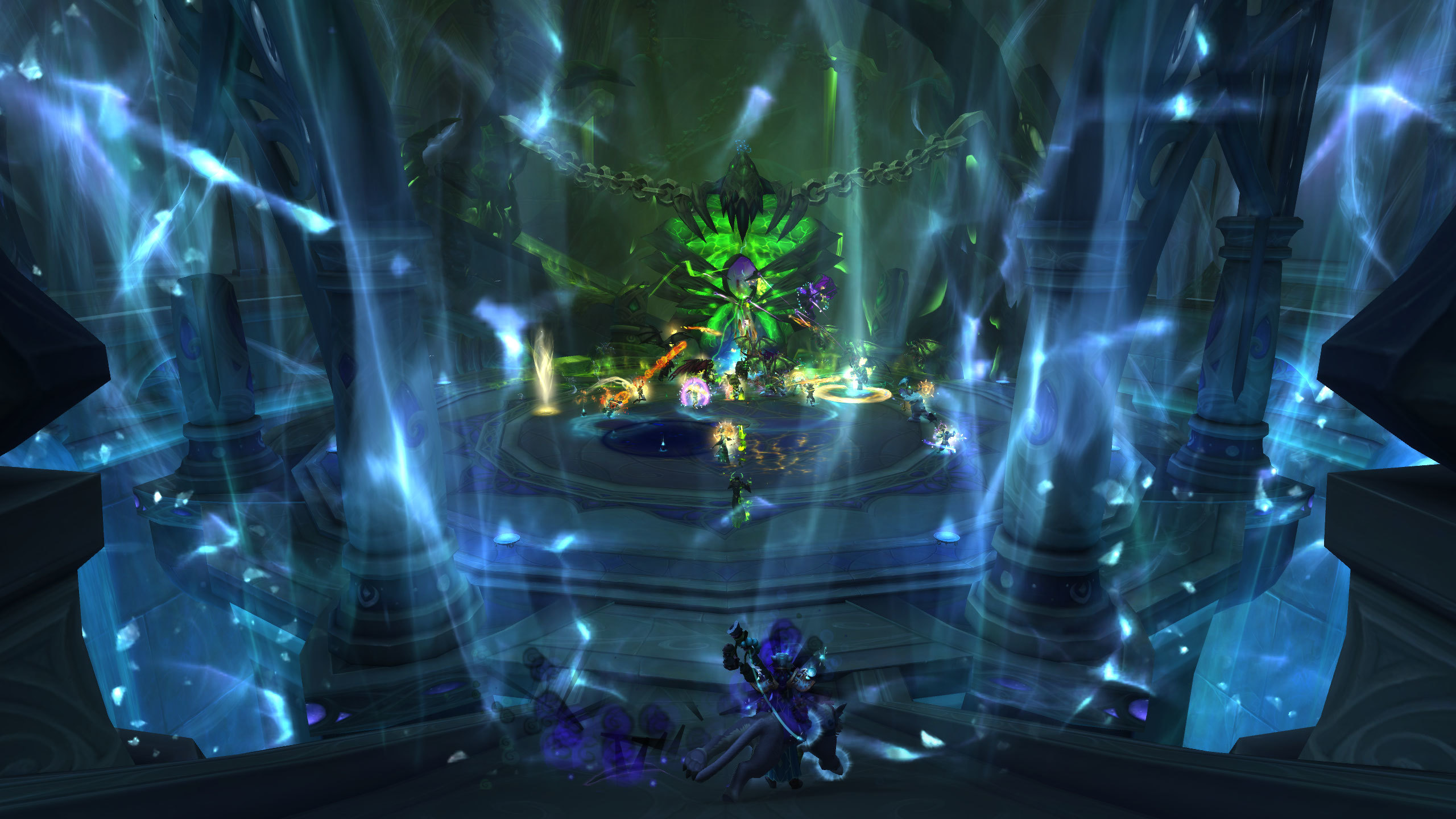
The first thing I changed was my job during the run. Instead of trying to play perfectly while also learning the encounter, I let someone who already knew the order of events lead, and I watched. It sounds passive, but it was the most active studying I had done in months. I paid attention to where the group stood when the room filled with adds, which cooldown went out before the big hit, and how long the quiet stretches between mechanics really lasted.
By the end of that evening I had a page of scribbles: positions, timers, who covers which interrupt. None of it was clever. All of it was information I had been missing for a whole season because I was always too busy reacting to collect it.
I also learned to read the room before the room read me. Raid layouts repeat their ideas: a safe corner, a moving hazard, a phase where the whole group stacks. Once I started naming those ideas, new bosses felt less like strangers and more like variations on fights I already understood.
Once you have seen an encounter solved cleanly, you start noticing how much of raiding is route planning. The order of bosses, the trash you skip, the spots where you reset your cooldowns, the moment you drink before the next pull. In my second week I went looking for a way to run those routes with people who treated them as routine, and that is how I came across the idea of a WoW Boost. The label undersells the part I cared about: an experienced group walks the content with you, and you keep your own character in the middle of it, taking your own turns and seeing the fights from the inside.
What I took from it was a template. A clean run has a rhythm, and rhythm is teachable. I wrote the rhythm of each fight as three short lines, what happens, what I do, what I check afterwards, and taped that list beside my monitor.
The third week was the test. I organised a small group of friends, opened the same raid, and tried to explain the first boss before we pulled it. The explanation took ninety seconds. The kill took one attempt. Nothing about my gear had changed since the wall I hit earlier; what changed was that the people around me now knew what the room was going to do, because I did.
Teaching it out loud exposed gaps, too. I realised I could not say who should take a particular debuff, so we settled it before the pull instead of arguing about it after the wipe. That small rule saved us several minutes on the next two bosses.
There was a quieter benefit as well. Two of the friends I brought along had been avoiding raids because they feared holding everyone up. After one calm, well-explained kill they asked when the next one was, and the group has met every week since. A shared plan makes a raid feel smaller and friendlier than the loot tables and leaderboards suggest.
If your progress stalls and the gear is not the reason, look at the information you carry into the fight. A few things worked for me and need nothing but a notebook:
None of this replaces practice, and nobody is going to learn an encounter without a few wipes. But a wipe teaches far more when you walked in with a plan, because you can see exactly which line of the plan failed and fix that one line.
If you want to see how I handle the character side of this, the talent tables on this site show the builds I settled on for raiding, and the start page lists the older posts in a sensible reading order. Whatever route you choose, keep your notes short, keep them honest, and bring them to the next reset.
The Time Barrier of Classic Farming and Dungeon Preparation World of Warcraft Classic brings an authentic, nostalgic return to the…
Kalimdor, one of the vast continents in the world of Azeroth, is rich with a tapestry of stories and legends…
The Challenge of Maintaining a Secondary Raid Character Transitioning to a new class in the current expansion is a rewarding…
Mount Hyjal, one of the most iconic zones in World of Warcraft, has captivated players since its initial announcement. Before…
The ‘snap pull‘ is a highly effective tanking technique used to quickly gather ranged enemies, minimizing the time spent in…
The War Within begins Worldsoul Saga trilogy. Azeroth’s heart becomes central storyline. This guide covers announced features, expectations, and what…
Introduction Leveling a character is one of the core parts of playing World of Warcraft. Every new character begins at…
In high-tier Mythic Plus and challenging solo content, “Face-Tanking” is often a Mathematical Impossibility. As mob damage scales beyond the…
A player’s ability to survive unavoidable damage is based on the consistent use of their own defensive toolkit. The Reliability…
The War Within reimagines questing by introducing richer narrative choices, branching dialogue paths, and outcomes shaped directly by player decisions.…
Jumping into a major event like Legion Remix means juggling several content streams—your campaign story, dungeon progression, raid unlocks, outdoor…
Introduction Creating alts or leveling fresh characters is one of the most enjoyable parts of World of Warcraft, but it…
Introduction: Transmog as Personal Expression Transmogging in World of Warcraft has evolved from a vanity feature to an art form.…
You’ve faced down Illidan’s fiery gaze in The Black Temple, you’ve stared into the maw of Deathwing himself in Dragon…
Introduction: The Evolution of Guilds in WoW Guilds have always been a vital part of the World of Warcraft (WoW)…
Introduction Weekends are prime time for players who balance work, family, and other commitments during the week. You might log…
The rivalry between the Horde and the Alliance has been at the heart of World of Warcraft (WoW) since its…
In World of Warcraft, PvP (Player vs Player) mounts are a prestigious symbol of a player’s competitive prowess. These mounts…
To make the most of your Bronze Tokens during WoW’s 20th anniversary, you’ll want to focus on daily quests and…
In WoW’s October 2024 Trading Post, you’ll reap top rewards such as the “Golden Harvest” bundle full of autumn-themed exclusives,…
Your adventure through Azeroth’s evolution begins with WoW’s launch, expanding its lore and introducing new territories with each expansion. Cinematic…
Introduction World of Warcraft is a popular online game that many players enjoy for its exciting challenges and adventures. Playing…
To become a master chef in gaming, start by collecting every cooking recipe, venturing from the markets of Dustwallow Marsh…
Facing Deathwing, the cataclysmic return of the Black Dragon Aspect, demands tactic refinement and teamwork. Start by mastering character abilities…
As the next WoW expansion approaches, you’ll want to get ahead by carefully cultivating resources. Start by tracking expansion predictions…
In WoW’s The War Within, Hero Talents let you customize your character to fit your playstyle and immerse yourself deeper…
To become a WoW WotLK Classic PvP legend, you’ll need to master your class mechanics, know when to release specific…
Making gold in World of Warcraft comes down to two major methods: farming and crafting. Both have their advantages, but…
In World of Warcraft, you’ve got a treasure trove of races and classes to choose from. Whether you’re leaning towards…
In WoW Cataclysm Classic, your top gold farms are in the Bastion of Twilight Raid, Firelands Boss Encounters, Twilight Highlands,…
Maximize your healing potential by mastering keybinding strategies. Efficiently manage your healing spells for quick access in battles. Bind crucial…
As dawn breaks on the horizon of Azeroth, the Dracthyr Evokers emerge, casting a formidable shadow over the land that…
As a seasoned Death Knight, you’ve mastered the art of war, but the true test of your mettle lies with…
Braving the bustling Brewfest, you’re beckoned to partake in Azeroth’s most beloved bacchanalia. As a professional guide through this pixelated…
Just as a master painter needs a clean canvas to begin their work, you need a clear and efficient interface…
As you navigate the treacherous waters of World of Warcraft’s PvP arenas, you’re aware that the difference between triumph and…
Just as Odysseus navigated the complex seas of mythology, you’re about to chart a course through the new Talent Tree…
questions welcome